
Certina
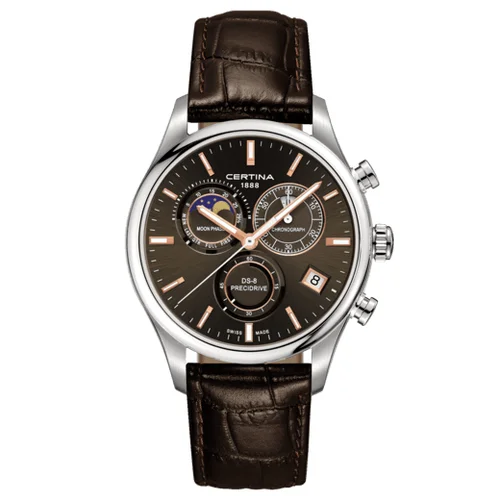
DS-8 C033.450.16.081.00— lug 21mm
Certina DS-8 C033.450.16.081.00: 21mm strap. Alligator, box calf, shell cordovan and rubber, cut and stitched in Milano. Choose your leather.
Artisanal Note
"This model requires a precise 21mm lug width to preserve the original sartorial balance."
Technical Specifications
Certina C033.450.16.081.00The essential strap measurement.
Browse 21mm straps →C033.450.16.081.00
ETA caliber G10.962 BH Hours, Minutes, Small Seconds | Date | Chronograph, Rattrapante | Moonphase
The Heritage
Compatible Straps
Selected for the 21mm lug width of the DS-8


FAQ
What is the lug width of the Certina DS-8 C033.450.16.081.00?
The Certina DS-8 reference C033.450.16.081.00 features a 21mm lug width. This is the internal distance between the lug attachments where the strap inserts. Precision measurement using a digital calliper is essential to avoid oversized or undersized straps, which cause excessive play or fitting difficulties. The total lug-to-lug distance is 47.5mm.
What is the best strap for the Certina DS-8 C033.450.16.081.00?
There is no universally 'best' strap—the choice depends on intended use. For formal elegance, we recommend alligator (black or deep burgundy satin), vegetable-tanned, which develops character with age. For daily versatility, vegetable-tanned calf (medium brown or cognac) creates visual continuity with the steel case. For robustness and practicality, 1000 denier nylon NATO or FKM rubber are technical choices: they resist perspiration, water, dust without obsessive maintenance. For formal rigour, shell cordovan is rare but extraordinary—equine leather ultra-dense, developing mirror-like patina.
How do you change the strap on a Certina DS-8?
The strap is changed via spring bars (stantuffi) that attach the lugs to the case. Using a spring bar removal tool (strap remover), gently press the spring bar button to compress the spring, then extract the strap from one side. Repeat on the opposite side. Insert the new 21mm strap by aligning the first lug, compress the spring bar, and snap the strap into the seat. Ensure both spring bars are properly secured and the strap does not rotate. Never use cutting tools or screwdrivers—they damage the case. If uncertain, consult a watchmaker or our replacement service.
Can I use an aftermarket strap on this Certina?
Yes, provided it respects the exact 21mm lug width. Quality aftermarket artisanal straps (vegetable-tanned leather, genuine alligator, premium rubber) often offer superior aesthetics and longevity compared to OEM straps. Always verify that the spring bar eyelet is compatible with your case profile: some aftermarket straps feature different threading that does not fit correctly. On a 41mm steel case like yours, straps in Italian leather, English bridle, or French rubber completely transform the watch's character, allowing you to adapt it to different seasons, clothing, or professional contexts.
How long does a leather strap last on a Certina DS-8?
A quality leather strap (alligator, vegetable-tanned calf, shell cordovan) lasts 4–7 years under daily moderate wear. Longevity depends on: frequency of wear, environment (perspiration, water, sunlight), tanning quality, leather thickness, maintenance (periodic cleaning, conditioning every 6–12 months). Thin leather straps fail sooner; shell cordovan lasts beyond 10 years. The critical point is the keeper loop (where leather repeatedly flexes): creasing occurs first here. The strap tip (where the hole enlarges from continuous insertion) is the second failure point. With careful maintenance and rotation between 2–3 straps, extend average lifespan by at least 50%. FKM rubber straps last 5–8 years; nylon NATO 8–12 years.