

Aluminum tweezers for strap removal
€24,00
Skip to product information


Cinturini Artigianali
Aluminum tweezers for strap removal
€24,00
SKU: MS-IT-MST7011
Aluminum spring bar tool
The professional tool for removing leather, rubber, FKM and nylon straps. Balanced aluminum body, hardened stainless steel tips. Dual pin size (1.2 and 1.5mm) to cover most standard spring bars.
For straps only
Important: this tool is designed exclusively for leather/rubber/FKM/nylon straps. Do NOT use it to remove steel bracelets (Oyster, Jubilee, Engineer) — the lug geometry is different and you risk damaging the case. Metal bracelets require a dedicated Rolex screwdriver kit.
Pin sizes
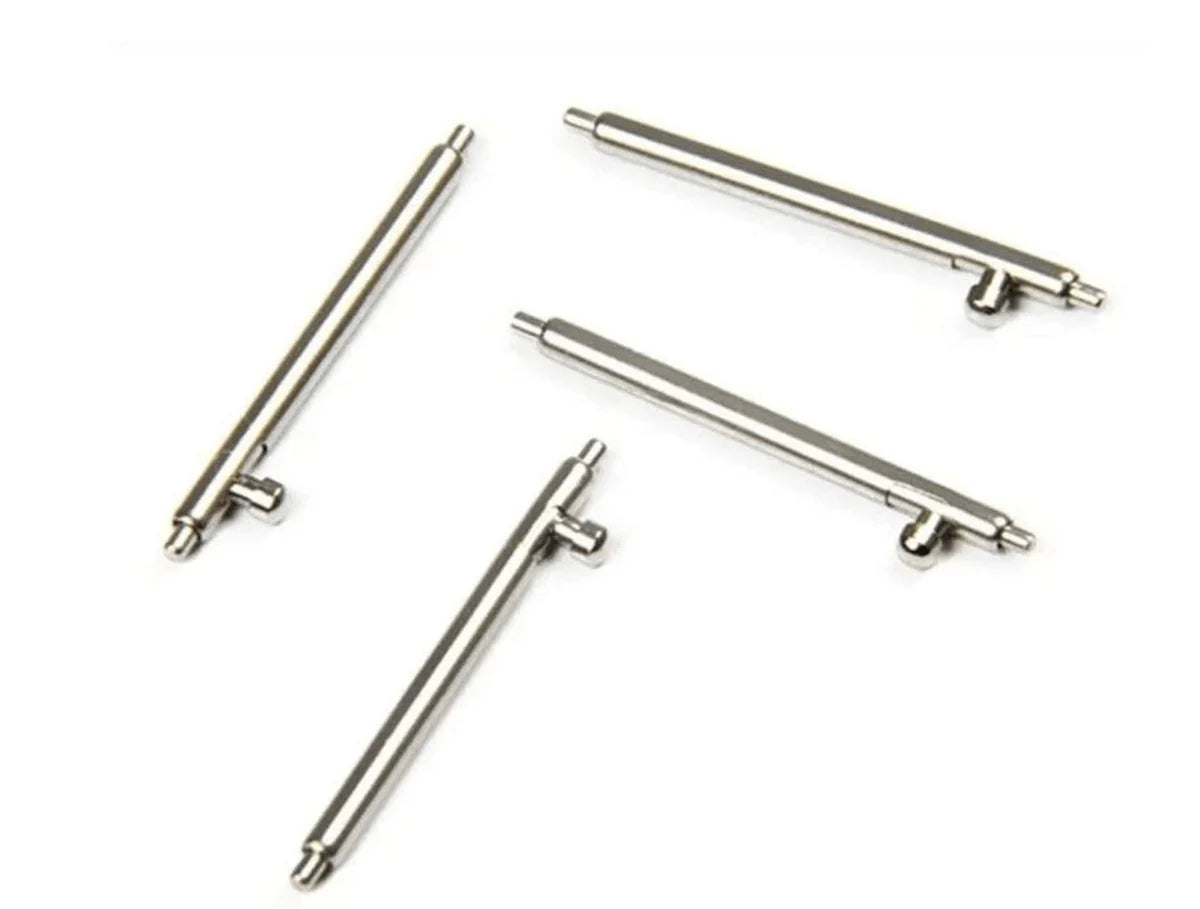
1.2mm pin for thin spring bars (dress watches, small vintage, Lady). 1.5mm pin for standard spring bars (sport watches, modern watches, most of the catalog). The pins screw onto the tool body — replaceable in 5 seconds.
Specifications
- Body: balanced aluminum
- Pins: hardened stainless steel, 1.2mm + 1.5mm
- Compatibility: leather, rubber, FKM, nylon
- Do NOT use on: steel bracelets, integrated cases (Royal Oak, Nautilus)
Tip: before removing the strap, apply protective tape on the sides of the lugs to avoid accidental scratches.
316L machined steel
Pin Ø1.8mm
Straight profile
Lab tested 10,000 cycles
Secure checkout · We accept
Free shipping Italy
24/48h delivery
30-day return
Free from Italy only
Atelier since 1984
Milan
Swiss Standard steel
316L · 10,000 cycles
Spedizione estimata in 2-3 giorni lavorativi
Estimated shipping: 2-3 business days (domestic), 7-9 days (European market), 15-21 days (international market).
SHIPPING & RETURNS
We strive to process and ship all orders in a timely manner, working diligently to ensure that your items are on their way to you as soon as possible. Need to return something? Just let us know.
Lo trovi anche in
Strap. Spring bar. Tool. Care.
The joy of little things
Changing your strap should be as simple as changing your shoes. With us, it is.
Every strap has integrated quick-release spring bars: swap it in one gesture, no tools, no risk of scratching the lugs. The same watch shifts mood with the moment.
Domande Frequenti
Do 1.2mm and 1.5mm pins cover the spring bars of a Rolex Submariner and Omega Seamaster?
Yes, both of these models mount standard 1.5mm spring bars, so the larger pin is the correct one. The 1.2mm pin is mainly for thin dress watches, vintage watches with small cases (under 36mm), or Lady lines like Cartier Tank or some vintage Longines. If you’re unsure about the size, always start with 1.5mm — it’s the most common format in the modern catalogue.
Why can’t I use it on Oyster or Jubilee bracelets? I already have a similar tool that I used on both.
The geometry of the lugs on integrated steel bracelets (Oyster, Jubilee, Bracelet Engineer) is completely different compared to lugs for straps: the spring bar pins are deeper, accessible only from one side and often require axial pressure rather than lateral pressure. Forcing this fork tool on an Oyster bracelet can scratch the case shoulders or deform the spring bar itself, with risk of breakage. For those bracelets you need a flat-blade screwdriver with calibrated thickness, not a fork tool.
How do I replace the pins? How long do they last before they wear out?
The pins screw directly into the aluminium body — unscrew the installed one, screw in the new one, operation takes 5 seconds without additional tools. Wear depends on usage: a collector who changes 2-3 straps per week can expect the tips to maintain correct geometry for several years, since tempered stainless steel is significantly harder than brass or soft steel pins on entry-level tools. Inspect the tip visually every 6-12 months: if you notice tip deformation or irregularity in contact with the spring bar, it’s time to replace.
Does it work on NATO and ZULU straps with metal keepers? And on straps with screw lugs?
For NATO and ZULU straps the process is different: these pass under the case and don’t use removable spring bars in the same way — in many cases you can simply pull the strap off without tools. The fork tool is useful only if your watch mounts a classic spring bar even with NATO-style. For screw lugs (screw bars, common on Panerai and some Tudor), this tool is not suitable: you need hex or flat-blade screwdrivers in specific sizes, since the retention mechanism is completely different.
Does the aluminium body hold up well? Don’t I risk bending it when removing a particularly stiff spring bar?
The balanced aluminium body provides sufficient rigidity for the force required in removing standard spring bars — the pressure required rarely exceeds 2-3 kg of lateral force, well within the structural limits of aluminium. The risk of deformation is practically nonexistent in normal use. The advantage of aluminium over solid steel is the reduced weight that improves manual control, reducing the risk of slipping and consequent scratches on the case. For particularly stiff or corroded spring bars, apply a small amount of clock oil or isopropyl alcohol before proceeding.