
MILAN STRAPS · CROCODILE
Crocodile skin: scales that last


Frequently asked questions
How do you distinguish crocodile from alligator on a watch strap?
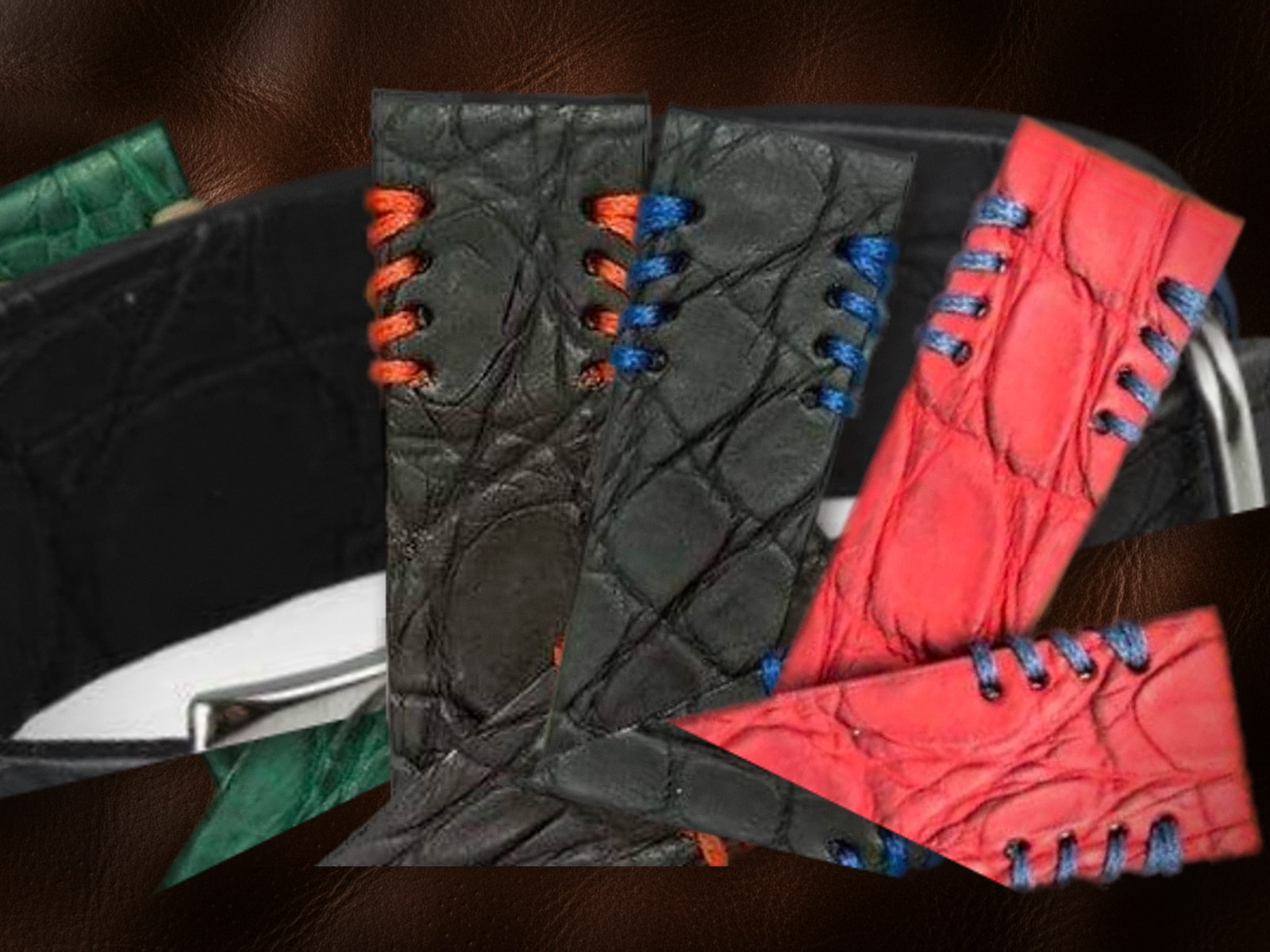
Excellent question. Crocodile has geometric and symmetrical scales, well-defined; alligator is more irregular and flat. On a 20mm strap for a Rolex Datejust, crocodile delivers a three-dimensional texture that catches light in an almost architectural way. Alligator is softer, crocodile more structured. Chanel historically used pure crocodile—the rigidity is part of the signature.
Is it true that crocodile requires particular maintenance?
Yes, but less than you'd think. Crocodile is robust—it handles daily water well if treated with neutral wax every 6-8 months. I advise against oil, which weighs it down. On straps for Omega Seamaster or IWC Pilot (18-21mm), I recommend a minimalist approach: soft brush, cotton cloth, stop. The patina that develops—especially on African crocodile—is the reward. It's not a necessity, it's an aesthetic privilege.
Is crocodile sustainable? And CITES?
Crucial question. The Nile crocodile (African) is farm-raised with certified CITES Appendix II documentation—completely legal. Farms are regulated and reduce pressure on wildlife. I use only crocodile from certified sources. On a strap for a Patek Philippe Aquanaut 40mm, you're wearing responsible exotic leather. Chanel discontinued crocodile in 2019 by strategic choice, not legal obligation. Sustainability exists—it requires transparency.
What makes crocodile scales different from alligator scales?
Crocodile scales are geometric, almost architectural—more pronounced and deeper than alligator, which appears smoother and more uniform. The pattern is recognizable at a glance. Available from 18 to 22mm.
Crocodile and alligator: what's the difference?
Crocodile scales are geometric and deep. Alligator scales are smoother and more uniform. On an 18 or 20mm strap, the difference is visible at first sight: crocodile has an almost architectural pattern, alligator a quieter surface.
Is it possible to order a custom crocodile strap at the atelier?
Casati Milano, Via XX Settembre 15, is where the strap is born together with who will wear it. The leather is chosen at the atelier, on your watch, with the time it takes. Book by appointment via WhatsApp.
Which watches pair best with a crocodile leather strap?
Crocodile is a dress-watch leather. I've paired it on a Patek Philippe 3970 in 20mm and on a Breguet Classique ref. 5177BA in 18mm—both watches where the geometry of the scales dialogues with the case. Sartorial style, nothing sporty.
How does crocodile change over the years—does it develop patina?
Yes. With use, crocodile develops a golden patina that intensifies the original color. The scales—geometric, deep—reflect light differently as the leather settles. On an 18 or 20mm strap, this process becomes noticeable after a few seasons of regular wear.
The next step
The right strap isn’t chosen. It is built, together.
From the atelier appointment to delivery, every step is made for those who know that things done well take time. Rare leathers, one piece at a time, eighteen months of warranty.
Request an appointment →What we offer
- We guide you through every step — with exclusive images directly from our atelier
- Over 50 artisanal steps for each strap — from leather selection to final stitching
- The time it takes to do extraordinary things — four, five weeks. Not a day less.
- An object designed to last a lifetime — cared for by us for eighteen months
- The right leather for your watch — chosen together, in the atelier, only for you
By appointment only · Milan